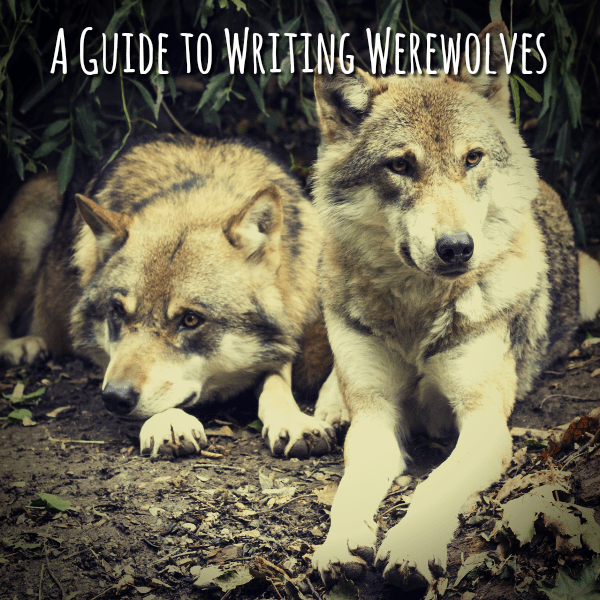
A Guide to Writing Werewolves based on Real Wolf Packs

For the last few years, I’ve dug into a lot of research on wolves for a werewolf book I want to write.  It’s been both interesting and alarming to see how much actual pack culture is different from the tropes we see in movies and TV about werewolves.

Typically in werewolf media, we see a pack that is led by an all-powerful Alpha Male.  He’s stronger and meaner than the other werewolves and that’s why he’s the go-to leader.  He knows how to get the job done.  Though many people believe by default this is also how wolves act in nature, that is not the reality of the situation at all.  Wolf packs are usually led by an Alpha pair, who are a mated male and female wolf.  In some cases, the female wolf will actually be the more aggressive of the two and the one that tends to keep the pack members in line.  This is not necessarily the female establishing her dominance, it’s more similar to the way your grandmother might keep you and all your cousins in line at a family gathering.  The mated pair that leads the pack more or less serve as the “parental” units of the pack.

A single male alpha as the lead of a pack is just something that has been fabricated over the years, and is likely more of a reflection of human culture, than that of wolves.  I’ve gotten to the point that when I see this trope reinforced over and over again in TV shows and movies, I have a hard time watching them.  This trope also tends to make it easy to exclude or leave out female characters, since male characters tend to be the central focus of the trope.  Female wolves are essential to the pack’s life, and therefore I think it would be good if fiction also reflected that.

Packs also share other similarities with human families, as many smaller packs are just the mated alpha pair and their cubs.  As I mentioned before, packs are often like human families, whether related or adopted, and function in somewhat similar ways.

In the wild, packs will fight for territory sometimes, especially if food becomes scarce in one area or if another pack seems to be dying out.  Packs can die out for a variety of reasons, including harsh winters, fighting with other predators, cubs being eaten by competing predators. These are things you can think about as you craft your werewolf story.

Obviously, fiction does differ from reality, but many of the tropes that surround werewolves are both erroneous and create stories where female viewpoints often get lost or are nearly non-existent.  If you are looking to do more research on wolves in the wild, there are a number of books written about wolf packs, especially those in Yellowstone.  Yellowstone also releases a yearly fact sheet about the packs in their area, that gives an account of how many wolves are in their packs, what sizes they are, what color their coat is, etc.  The Yellowstone wolves tend to be a unique opportunity for humans to closely monitor and learn more about wolves, since they were only recently re-introduced into the park and there is so much activity in Yellowstone.
Don’t dabble – Tips To Stay Committed To Your Writing

A few weeks ago, one of my favorite authors for self-help, Gabrielle Bernstein, posted a video about staying on course for what you want.  At the bottom of her post, she had the option to tweet about it and the tweet basically said: “Stay committed, don’t dabble.”  This concept is something I’ve talked a lot about with those in my little circle of productivity, the group of women that I email and do writing sprints with.  The truth is, I used to dabble a lot.

This was both in and out of writing.  I’d start a book, or write in online communities and happily proclaim I was a writer, despite the fact that I had no goals with my writing and I rarely finished anything.  I dabbled in writing.  There were no stakes with my writing, I did not take it seriously.  I dabbled in other things too, which took my time and attention away from the writing I did.  Part of this was due to the fact that I struggled to say “No” to people.  If someone wanted my time, attention and help, I would bend over backward and put my own projects aside for months on end.  There are times I still say “Yes” when I should say “No.”

This leads us to what I really wanted to talk about, how to stay committed and avoid dabbling, for writers and artists.

1. Learn when to say “No.”

Successful people know when to say “No.”  They have learned to say it with conviction.  I do my best to think very consciously when people ask me to work on projects with them. I often get asked to proofread things for friends, or to help them with their own projects.  I will say “Yes” only if there is a reciprocal relationship when it comes to helping with these friends, or if I believe editing their project will help me become a better writer.  It sounds harsh, but it also isn’t fair for them to expect me to beta/edit chapters upon chapters without some kind of give/take.  I also will take on a project here or there that I just really have an interest in.  Some of my friends are brilliant writers and I aspire to be more like them, so helping them would also warrant a “Yes.”

2.  Practice makes perfect.  Take your practicing seriously.

If I had a dime for every time someone said, “Oh, I like to write.  I could be a writer just like you if I had all the free time you have.”  Though I may have a flexible schedule that allows me to devote a lot of time to writing, that would mean nothing if I was not devoted to the practice.  I write nearly every day.  I manage my own schedule and I stay committed to the work I want to do.  I read books, I write, I read more books and I work to improve my writing.  Publishing credits are not something a magical fairy bestows on you and leaves under your pillow as you sleep.  You get the by writing often, sharing your work with others for eyed back, learning how to be a better writer, and then sending that work out into the world.  If you have a day job, commit to a word goal or an amount of time you will write each night.  There are writers who got published with small word count goals like 200-500 words a day.  If you write every day, those words add up quickly to short stories and novels.

3. Set goals and deadlines.

Every short story I’ve submitted has a deadline of some sort.   Usually, it’s a date by which you must submit your story.  You can set your own deadlines and I suggest having them somewhere they are easily visible.  I usually post my long-term goals up on my wall and keep daily and weekly goals in my bullet journal.  Deadlines give you something to work towards and they encourage you to finish your projects.

4. Finish what you started.

This does not go for every project and you will get to a point where you can identify when it is time to set a project aside and work on something else.  That being said, you still need to finish things.  I have not been great about finishing some of the novels I’ve worked on, but I’ve finished many short stories and comic scripts, even if they all did not make it to publication.  If a writer has 100 unfinished short stories, they aren’t likely going to be able to find a place to publish them, but if you keep finishing projects you can find a way to get them out to the world, either by finding a traditional publisher or through self-publishing.  If nothing is finished, there’s nothing to publish.
If writing is truly something you want to do, stay committed.  Don’t dabble.  If you keep at it, I am sure you will find a way to get what you want to say out to the world

Review – Nobody Wants to Read Your Sh*t

I’m a fan of Steven Pressfield’s books on writing and creating.  If you have not read them, his books “The War of Art” and “Turning Pro” are amazing and their influence literally changed my life as a writer.  I went from haphazardly writing stories that I never finished, writing whenever I felt like it, to treating writing like a real endeavor that I wanted to pursue.  They are perfect for the artist/writer/creative types who just can’t seem to get their fire going.  If you suffer from chronic writer’s block, I definitely recommend picking them up.  Pressfield refers to that sort of stuck-ness as the Resistance and shows you how to beat it and move beyond it, for the most part.

The first two books in the series teach you how to become a professional and practice the right habits to become more successful as a creative person.  His third book in the series, “Nobody wants to read your sh*t” takes you in a slightly different direction.  In this book, Pressfield talks about how you shape a story, what you need to have in your story and why concept and genre are important.  This book is very much one where you can learn the rules of writing a story, and then later break those rules.

Pressfield also outlines things in a very simple fashion and revisits the lessons he has taught throughout the book.  Not all of his anecdotes were interesting to me, but I greatly prefer being taught things with a story alongside them, so it still worked.

When I started this book, I thought there might be some magical tidbit of information about how to get people to read my writing.  Instead of a fancy how-to guide on getting people interested in your story, Pressfield teaches you the basics of writing a good story, one that will satisfy the reader and make them want to read more of your work.

This book also reminded me that good writers are always learning.  Writing a good story is not an accident, as so many people who are not writers might think.  It’s intentional and a significant amount of work goes into such a story.

If you are a writer/artist, especially one at the beginning of your career, I would definitely recommend picking up all of Pressfield’s books on the subject.  This third installment was a quick read, just as the other two were, so they are worth both the investment and the time it takes to read them.

Capturing the Muse – Writing for the uninspired

With the advent of the internet, it’s easier than ever for writers to connect with one another.  Because of this, I have met lots of writers who have very active muses, those that do not wait for the muse, and those that can only write when their lazy muse feels like it.  I consider myself to fall in the second camp, I don’t wait for my muse or for inspiration, to write.  If you’re like me, this can mean tricking yourself to producing.

Okay, tricking sounds simple.  It’s not really a trick, it’s a series of carefully planned habits and practices that help me make sure I show up to write even when my muse doesn’t.  Here are some tips to get you started down that path:

  1.  Create a daily writing habit – Stephen King and several other professionals will give you this advice.  Whether it’s setting a word count goal, or setting aside 20 minutes a day to write, create a goal and stick to it.  Even if you write just 200 words a day, that’s 73,000 words a year.  That’s a small novel.  That’s several short stories.  This writing may not feel inspired at first, but if you show up to do the work, you’ll be surprised how often it starts to feel inspired.
  2. Find a process that works for you – I have several work sheets for story planning.  When I start writing a story, especially short stories. I pull one out and start the very fundamental process of character building on them.  I usually start with 3-4 characters, give them names, 4 personality traits (at least one negative trait).  From there I add a setting if I didn’t already have one in mind and I build from there.  I am the sort of writing that likes plot that stems from character, so that is why I start with characters.  Once I have plot, I work on world building and theme.   The worksheet I use the most is here, which I based off a story workshop I attended taught by comics author Kelly Sue Deconnick.  It gives me a great building block to start with, whether my muse had chosen to show up or not.  Sometimes the traits I choose are literally random ones.  Other times I have an idea of the characters and they come naturally.
  3. Writing prompts – Find a prompt you like, set a timer (15-30 minutes is usually the best) and write.  The scene can be random or with characters you’ve already created, but write and see what happens.

If you want advice beyond what I can recommend in the space of this small blog post, I have a few books to recommend.  They are as much about creating a writing practice as finding inspiration, but they have helped me immensely over the last few years.

Both of Pressfield’s books are relatively quick reads, but they shine a good light on the practices of a “Professional” even when you don’t feel like one yet.  He also just released a another book, Nobody wants to read your Sh*t, which he released for free to start out, so you might still be able to grab a free copy.  I’ll be reading and reviewing that book, in a couple weeks.

  • On Writing – Stephen King

I’m not a fan of horror, but I’m smart enough to know that Mr. King has some amazing advice on writing.  I listened to the audiobook, which he reads, and it’s one I’ve gone back to time and time again.

  • Fantastic Mistakes – Neil Gaiman’s “Make Good Art” Speech

I own the hardcover book, but you can also watch Gaiman give the speech here.  This is something that is great to read or listen to when you feel like you can’t do this.  His voice is kind and encouraging, which makes it seem almost like his advice is coming from a dear friend.


Comic Writing Resources

Even though I had read comics for years and wanted to be a writer, it was not until I attended a comic writing workshop that I realized writing comics was an option.  Over the last few years I’ve collected a few resources that have helped me figure it out along the way.  I haven’t had a comic published traditionally yet, but I did get to participate in a really fun fancomic that centered around Wanda Maximoff.  I wrote the first two pages of the comic script and you can see the finished product here.

As for resources, when starting out in comics the hardest thing can be understanding not only how to write a script, but what makes a good script, how the industry works, how to find collaborators, etc.  Here are a few places to find help:

  • The Comic Book Script Archive – Here you can find PDF or word docs of many different comics from many different writers.  I’ve sat down a few times with the script from a comic and the comic itself, to see how the writing started and what became of it.  You can also see how the masters write their comics, who sticks to a certain script style and who deviates from it and why.  I would suggest both reading the scripts and the comics that came from them, to get an idea of how the pages and panels took shape.
  • Jim Zub’s  Website – Jim has a TON of tutorials about writing comics.  If you look on the right side of his website, you’ll see tutorials on writing comics, how to pitch comics, as well as many other things.  If you see him at a Con, he also has a great panel that covers the basics.  I attended his panel at Salt Lake Comic Con and he gave great advice during it about how looking for people to work within the industry is “fishing” not “hunting.”  This changed my approach completely about how I go about finding people I want to work with.
  • Making Comics – Making Comics did a great MOOC about writing a comic pitch, but they also have a lot of great resources on their website.  They have stuff about writing, drawing, coloring, lettering, and everything beyond it.  It’s a great website to check out when you’re not sure what to do next or if you want to learn a skill that you don’t have quite yet.
  • Kelly Sue DeConnick’s Tips for Writing – The workshop I mentioned at the beginning of the post was taught by Kelly Sue.  It opened my eyes and changed my path as a writer.  This is a great tumblr post with some of the wisdom she shared about writing and writing comics.
  • Words for Pictures by Brian Michael Bendis – This is the one resource on this list that is not free, but well worth it.  It has not only info from Mr. Bendis, but many other great writers, artists and creators within the comics industry.

Are there any other great resources you’ve found?  If so please share!  I’m always looking to learn more as a writer.

Try, Try Again

In the last few months, a lot of my projects have gotten away from me.  Some have been finished and I’m satisfied with the work I’ve submitted, while others sit dead either on my computer or in the back of my mind.

It’s easy to get disheartened when you don’t finish a project you loved, or when you finish it, but it gets rejected.  I’ve thought a lot about my own writing, feeling stuck and the need to keep trying despite the worry that you’ll never be good enough.  There is a great quote by Ira Glass about creativity and how you have phases where your talent and ability do not meet up with your vision for you work.  You want your work to be special, but you haven’t quite put all the work in yet for it to be.  It simply takes time.

My writing is better than it was five or ten years ago, partially because I’ve worked hard to improve it.  I seek out articles, podcasts and books about writing.  Recently I worked on a comic script for a contest and though I’ve written a few comic scripts now, I still pulled out examples of scripts from writers I love to see what I could do to make my writing tighter, better, more descriptive.  The best writers I know, my favorites, most of them are still trying to grow and learn too.

My best advice for when you are stuck or unable to keep trying, is to find a buddy who is also working to better themselves.  Check in with each other.  I do this with my closest friend, we actually email on a daily basis (several times a day even) about what we’re working on, what our goals are, and what we are actually getting done.

The best part of this?  When one of us fails, the other tells them to pick themselves up and keep trying.  We comfort each other.  Writing and other creative work can be impossibly isolating, having someone in your corner to tell you to keep going is incredibly helpful.

So ignore that voice in the back of your head that says “Give up.”  Find someone you can be accountable to and that will be accountable to you.  And keep going.

Bleed on the Page

You’re probably looking at the title of this blog post and going, “Umm, that’s a little violent, Aubrey.”  It’s okay, it’s not as bad as it sounds.  Let me explain what it means to me.

I usually have my best friend proofread/edit my writing before I send it off into the wild blue yonder to be published.  Sometimes her feedback includes, “Bleed on the page, Aubrey.”  What this has come to mean for us, is that the writing is either not deep enough or it doesn’t have enough of my voice in it.  I need to dig deeper, I need to expose more of my core in the writing.  My blood needs to go into that story.

The hard part about writing, even writing fiction, is that you tend to expose the parts of yourself that make you vulnerable.  Not only do you bare it for the world to see, but then the world can come back and say they don’t like your weak spots, they don’t like the things you love, and the worst of all, they don’t like you.  There’s a flip side to that, though, and really, that is what matters.

Pain and vulnerability are universal.  If you are speaking from the heart about real feelings, it is more than likely that your story will feel real and weighty to your reader.  They will be able to relate to your characters because you’ve put real emotion into them.

That is why we bleed on the page.  I let my life force drain from me into the words I craft, in the hopes that someone will read it and go, “I see myself.  That’s what’s inside me too!” as they read.

The first piece I ever got published was all about a verbally/emotionally abusive relationship I was in.  It was raw and sore and I got to write a better ending for my character than perhaps the one I got myself.  It was cathartic and I’ve had more than one person ask if they could share that piece with a friend or family member that had been in an abusive relationship.  I think that is part of why we bleed on the page, to share our stories and to feel a connection with others.

Neil Gaiman put it much better than I could in his book Fragile Things:

“I believe we owe it to each other to tell stories.”

I believe that too, and when we bleed on the page and dig a little deeper, we’re sharing our truth.  That’s what makes good stories into great stories.


Got You Covered – Music Monday

I’m a fan of cover songs.  Always have been.  I particularly like songs that either replicate the magic of the original or deviate in a way that creates a new magic all it’s own.  Some of the songs below are covers I’ve been a fan of for awhile, others are new to me.

Here’s the tracklist:

  1. How Deep Is Your Love – the bird and the bee
  2. Bad Romance – Lissie
  3. Little Talks – Julia Sheer & Jon D
  4. Come As You Are – Civil Twilight
  5. Viva La Vida – Sofia Karlberg
  6. Bette Davis Eyes – Sexton Blake
  7. Dreams – Gabrielle Aplin & Bastille
  8. Young Blood – Birdy
  9. Edge of Seventeen – The Wind and The Wave
  10. Fast Car – Michael Collings

Wander – Music Monday

Obviously, April’s been a bit busy for me…. But we’ll now return you to your regular blogging program, complete with Music and writing tips.

I promise I didn’t just fall off the face of the earth.  My little cos-family lost a dear member at the end of March.  I planned, coordinated and ran an online fundraiser for Relay For Life that raised almost $1,300.  And then I took a little bit of time off and went up to Pinedale and Grand Teton National Park in Wyoming.  Which, let me say, is a stunning part of our country.  Check out the picture below if you don’t believe me.

12976283_1047212448685729_846055160_n
Grand Tetons

So, all of those things tore me away from blogging for a little while.  But after that all that, I figured a playlist about wandering might be fitting.  So this is equal parts songs about the journey and songs to listen to while on the journey.

Tracklist:

  1. Drifting – On and On
  2. Bridges – Broods
  3. Satellite – Guster
  4. This Side Of Paradise – Hayley Kiyoko
  5. Open Season – High Highs
  6. Baby Doll – The Fratellis
  7. Cannibal Queen – Miniature Tigers
  8. Buildings and Mountains – The Republic Tigers
  9. Nearly Forgot My Broken Heart – Chris Cornell
  10. Lake of Silver Bells – Carbon Leaf


We’re Here To Save The Day – Music Monday

capandsharonI went to Salt Lake Comic Con’s FanXperience over the weekend, and I figured it would be fun to stick with the superhero theme.  We had a blast!  It was a very fun convention and we got to see and do a lot of fun things.

One of my favorite past times is cosplaying as some of my favorite superheroes, and I usually listen to some music in the car to pump me up before we arrive.  So this week’s pla
ylist is full of those songs.

Here’s the track list:

  1. We’re Here To Save The Day – The Constellations ft. Asher Roth
  2. Rise Above 1 – Reeve Carney, Bono & The Edge
  3. Fire Escape – Civil Twilight
  4. Titanium – David Guetta, Sia
  5. Learn to Fly – Foo Fighters
  6. Seven Nation Army – The White Stripes
  7. The Fighter – Gym Class Heroes ft. Ryan Tedder
  8. Radioactive – Imagine Dragons
  9. Live To Rise – Soundgarden
  10. They – Jem